
Skip to content

Five industries worked hands on, so we arrive knowing where the gaps usually are.

All industries →Request a demo

Four ERP platforms in house, and fifteen capability modules. The recommendation is never tied to a licence quota.

All solutions →Request a demo

One team from platform selection through to the reports on your desk.

All services →Request a demo

Learning Centre

Guides, how-tos, comparisons and a plain-English glossary, written by the consultants who deliver the projects. No form in front of any of it.

Free toolsNo gate before you use them
Plain EnglishBOQ, retention, WIP and IPC explained
Written in houseBy the people who run the projects
Browse all resources →

Nobody in UAE ERP publishes their tools or their pricing. We do both.

Free tools →Request a demo

Consultants in the UAE, technical team in South Asia. Cost stays sharp without cutting corners.

About QZ Infomatics →Request a demo
Request a demo +971 4 243 4010

Restaurant Management Software Dubai

You know what your busiest dish is.
Do you know whether it makes money?

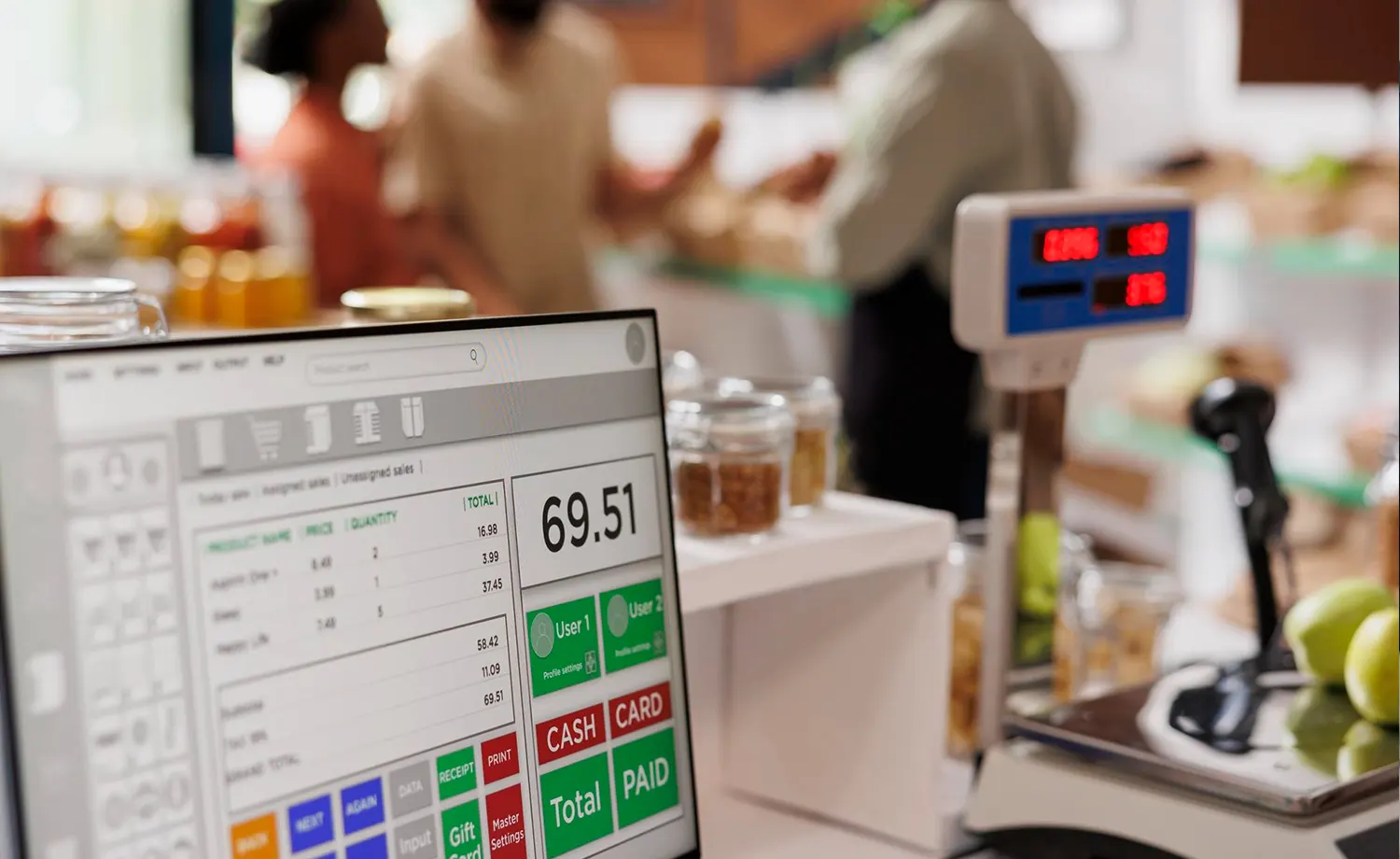
Restaurant management software runs the whole operation from one system — point of sale, kitchen display, table and order management, recipe costing, inventory, purchasing and staff scheduling. It connects front-of-house sales to back-of-house stock, so every dish sold deducts its ingredients and shows the real margin on each item.

✓ Ingredient-level stock on every sale✓ Recipe cost that follows supplier prices✓ Channel margin after commission✓ Theoretical against actual usage
Restaurant Management Software Dubai

Scope

POS is one part of it

A point of sale takes the order and processes the payment. That is where most restaurant technology stops, and it is why so many Dubai operators have accurate revenue figures and no idea about cost.

Front of house

POS, table and floor management, split bills, course timing, order modifiers and waiter handhelds.

Kitchen

Kitchen display screens routing orders by station, preparation timing, and ticket times measured rather than estimated.

Back of house

Recipe and portion costing, ingredient-level stock, purchasing, supplier price tracking, wastage recording and central kitchen transfers.

Above the outlet

Multi-site reporting, labour cost against sales by daypart, and channel margin across dine-in, takeaway and delivery.

A single independent cafe may genuinely only need the POS. A group with three outlets and a central kitchen needs all four, and usually discovers it about eighteen months too late.

Costing

Recipe costing is where the money hides

Why it matters here

Imported produce, moving prices

Each menu item is built from ingredients carrying current purchase costs, yields and wastage factors. When supplier prices move, dish cost and gross margin recalculate automatically.

  • › Most produce imported, with prices moving on season and freight
  • › A dish costed at launch and never revisited drifts quietly
  • › From 68% gross margin to 51% without anyone noticing
  • › And the items that drift hardest are usually the best sellers
Ingredient-level stock →
What it unlocks

Stock that deducts by ingredient

Recipe costing also drives ingredient-level stock deduction on every sale. Without it, stock is counted rather than tracked.

  • › Every sale deducts its ingredients
  • › Not its menu line
  • › Which is what makes the variance report possible at all
  • › Over-portioning, wastage and theft become measurable
The variance report →

Delivery

Delivery aggregators and channel margin

Orders into the kitchen, not onto a tablet

Aggregator orders pull straight into the kitchen display and the sales ledger rather than arriving on a separate tablet per platform. The tablet wall disappears.

Commission recorded per channel

Which produces net margin per order by channel — usually the number that changes how a Dubai operator prices delivery items.

The number operators are surprised by

A dish at 65% margin dine-in can be at 28% after aggregator commission, packaging and the discount that won the order. Delivery growth frequently turns out to have been reducing profit.

Which aggregators integrate directly, and which need a middleware connector, is worth establishing against your specific platforms during scoping rather than assuming from a general claim.

Variance

Inventory, wastage and the variance nobody sees

The report that matters

Theoretical against actual usage

The system knows how much chicken 340 covers should have consumed. The count says how much actually went. The variance is isolated per ingredient.

  • › Over-portioning, per ingredient
  • › Wastage, separated from portioning
  • › Staff meals, if they are being recorded
  • › And shrinkage, which is what is left
What makes it possible →
Stock control

Priced, received and flagged

Stock is tracked at ingredient level with supplier prices, par levels and reorder points. Deliveries are received against purchase orders with price variance flagged at goods-in rather than at month-end.

  • › Ingredient-level stock with supplier prices
  • › Par levels and reorder points per item
  • › Received against purchase orders
  • › A supplier increase caught on delivery, not in the accounts
Purchasing →

Most operators running on spreadsheets have never seen this number. It is frequently the largest single controllable cost in the business.

Multi-outlet

Multi-outlet and central kitchen

One menu, one recipe library

Shared across outlets, with transfers from a central production kitchen tracked as internal movements at cost so the outlet carries the true cost of what it received.

Consolidated comparison

Sales, wastage, labour cost percentage and margin per outlet, with outlet managers seeing only their own site.

Where groups find the first improvement

Same menu, same prices, materially different food cost percentage between two branches. That gap is almost always portioning or receiving discipline, and it is invisible without shared reporting.

Labour

Labour and scheduling

01Scheduled against forecast covers

Not against last week's rota. Labour cost is tracked as a percentage of sales by daypart rather than as a monthly total.

02Attendance feeds WPS payroll

Overtime, late deductions and unpaid absence calculated from actual clock-in rather than consolidated from paper timesheets at month-end. WPS-compliant payroll.

03Food and labour together, or neither

The two account for most of a restaurant's controllable spend. Managing one without the other is how operators end up cutting portions while overstaffing Tuesday lunch.

UAE compliance

UAE compliance

5% VAT with compliant receipts

Carrying the mandatory fields, with the ability to issue a full tax invoice on request at the counter.

Service charge and municipality fee

Handled as separate lines with the correct treatment, not folded into the item price.

Arabic and English receipts

Expected by many customers and required by some landlords.

Food safety and traceability

Batch and expiry tracking on received goods, supporting Dubai Municipality inspection requirements and, where relevant, HACCP records.

E-invoicing

Any system deployed now needs a defined path to the UAE e-invoicing standard as the mandate phases in through 2027.

Pricing is usually per outlet plus per POS terminal, billed monthly, with hardware quoted separately. Implementation runs two to six weeks per outlet, and most of that is building the menu, recipes and modifier structure rather than configuring software. Groups pilot one outlet, then roll the template across remaining sites in days each — outside a seasonal peak, because kitchen staff cannot absorb a new system during Ramadan or the winter season.

Restaurant FAQs

What operators ask us about restaurant software

What is restaurant management software?

Restaurant management software runs the whole operation from one system: point of sale, kitchen display, table and order management, recipe costing, inventory, purchasing and staff scheduling. It connects front-of-house sales to back-of-house stock, so every dish sold deducts its ingredients and shows the true margin on each item.

What is the difference between a restaurant POS and restaurant management software?

A POS handles the transaction — taking the order, splitting the bill, processing payment. Restaurant management software includes the POS and adds recipe costing, stock control, purchasing, central kitchen transfers and multi-outlet reporting. A single cafe may only need the POS; a growing group needs the layer above it.

Does it integrate with delivery aggregators?

Yes. Integration pulls aggregator orders straight into the kitchen display and the sales ledger instead of a separate tablet per platform, with commission recorded against each channel. That produces net margin per order by channel, which is usually the figure that changes how a Dubai operator prices delivery items.

How does recipe costing work?

Each menu item is built from ingredients carrying current purchase costs, yields and wastage factors. When supplier prices move, the system recalculates dish cost and gross margin automatically, so you can see which items have quietly stopped being profitable. It also drives ingredient-level stock deduction on every sale.

Does the system handle multiple outlets and a central kitchen?

Yes. Multi-outlet setups share one menu and item master, with transfers from a central production kitchen tracked as internal movements at cost. Consolidated reporting compares sales, wastage and labour cost per outlet, while outlet managers see only their own site.

Is restaurant software VAT-compliant and FTA-ready in the UAE?

Yes. Bills carry the 5% VAT treatment and the tax-invoice fields the FTA requires, with service charge and municipality fee handled separately where they apply. Any system deployed now should also have a defined path to the UAE e-invoicing standard as the mandate phases in through 2027.

How much does restaurant management software cost in Dubai?

Pricing is usually per outlet plus per POS terminal, billed monthly, with hardware — terminals, printers, kitchen displays — quoted separately. A single-outlet cafe sits at the low end and a multi-brand group with a central kitchen and delivery integrations at the upper end. Implementation is priced on menu size and outlet count.

How long does it take to set up?

Two to six weeks per outlet. Most of the time goes on building the menu, recipes and modifier structure and on training staff, not on installing software. Groups usually pilot one outlet, refine the menu configuration there, then roll the same template across remaining sites in days each.

Talk to a consultant

Talk to an ERP consultant, not a salesperson

Book a free 30 minute call with QZ Infomatics in Dubai. You will leave it with a platform recommendation, the reasoning behind it, a realistic timeline and an indicative budget band — before you commit to anything.

  • ✓ A consultant who delivers projects, not a sales desk
  • ✓ Odoo, Microsoft Dynamics 365 and Oracle NetSuite compared honestly
  • ✓ Licence cost and implementation cost quoted as separate numbers
  • ✓ If we are not the right fit for you, we will say so

Book a free call

We reply within one working day.

Or WhatsApp us on +971 4 243 4010

Request a demo