Skip to content

Five industries worked hands on, so we arrive knowing where the gaps usually are.

All industries →Request a demo

Four ERP platforms in house, and fifteen capability modules. The recommendation is never tied to a licence quota.

All solutions →Request a demo

One team from platform selection through to the reports on your desk.

All services →Request a demo

Learning Centre

Guides, how-tos, comparisons and a plain-English glossary, written by the consultants who deliver the projects. No form in front of any of it.

Free toolsNo gate before you use them
Plain EnglishBOQ, retention, WIP and IPC explained
Written in houseBy the people who run the projects
Browse all resources →

Nobody in UAE ERP publishes their tools or their pricing. We do both.

Free tools →Request a demo

Consultants in the UAE, technical team in South Asia. Cost stays sharp without cutting corners.

About QZ Infomatics →Request a demo
Request a demo +971 4 243 4010

Construction ERP Software UAE

ERP built around the project,
not bolted on around it.

QZ Infomatics implements construction ERP software for contractors across the UAE and GCC. The system links the bill of quantities to project budgets, then handles subcontractor certification, retention, variation orders, progress billing and interim payment certificates as standard configuration rather than custom development. We deliver it on Odoo, Microsoft Dynamics 365 Finance & Operations or Oracle NetSuite, at a fixed price, typically live in eight to twelve weeks.

✓ Primavera P6 integration✓ IPCs generated in days✓ Secure audit trail✓ BOQ to payment integration
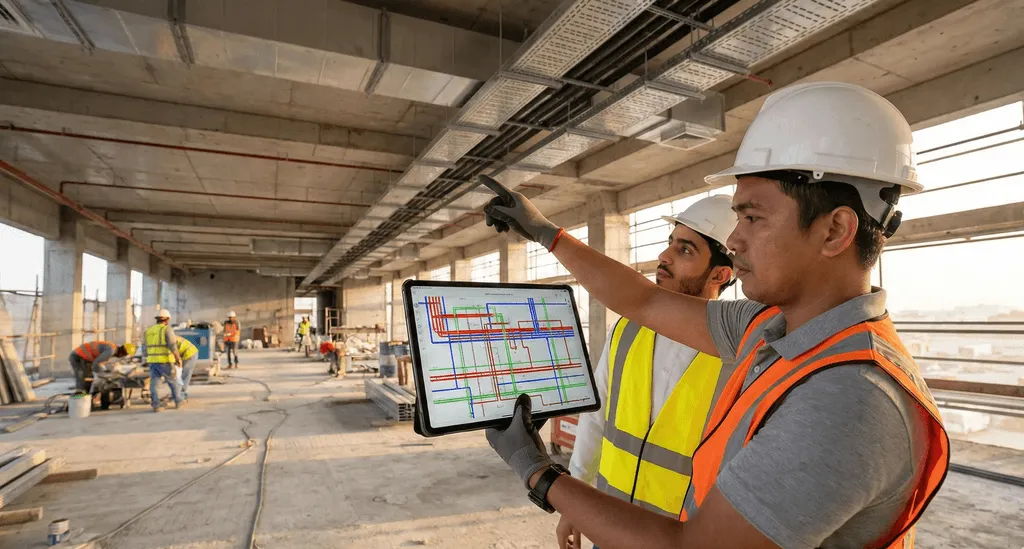
Site engineer reviewing project cost on a construction ERP in Dubai
Retention receivableAED 6.84M

Where it hurts

The problems contracting companies face

Every one of these turned up in a discovery session with a UAE contractor. If four or more are familiar, the system is the problem, not the team.

01No real-time visibility into project cost against budget

Committed cost sits in someone's inbox, so a package is over budget weeks before anyone can see it.

02Progressive billing calculations that delay cash collection

Measured work valued by hand, so the certificate goes out late and the cash lands later.

03Subcontractor management tracked in spreadsheets

Rates, claims, advances and back-charges reconciled manually every single month.

04Materials procurement disconnected from project planning

Purchase orders raised without a budget check, against a programme the system cannot see.

05Payroll and labour allocation across multiple active projects

Site labour costed to a department instead of the cost code that actually consumed it.

06Revenue recognition errors that distort financial reporting

Percentage of completion calculated outside the ledger, so WIP and the P&L disagree.

07Plant and equipment utilisation not tracked to project

Owned plant absorbed as overhead, so job margin looks better than it is.

08Retention management requiring manual calculation

Retention held and released on a spreadsheet nobody can age across closed jobs.

Scope

What our contracting ERP software covers

Five areas, configured as standard. None of this is custom development you pay to maintain through every upgrade.

02

Subcontractor management

  • ✓ Subcontractor contract and rate management
  • ✓ Progress claim submission and approval
  • ✓ Advance payment and retention tracking with release scheduling
  • ✓ Performance scoring and compliance tracking
Certification & accounting →
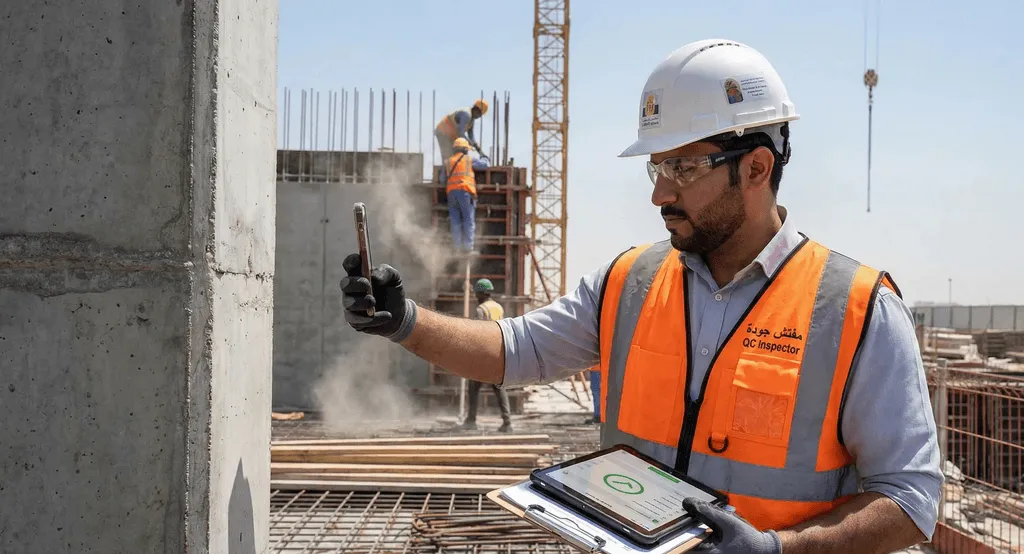
Subcontractor progress claim being assessed on site

End to end

From BOQ to cash, without leaving the system

This is the chain every contracting business runs on. Most ERP failures happen because one link in it lives in a spreadsheet. Here is where each step sits.

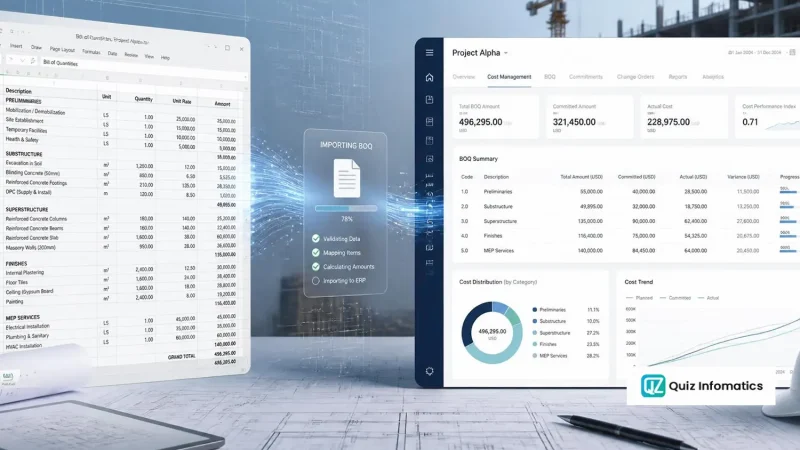
  1. The BOQ becomes the budget

    The priced bill is imported line by line and mapped to cost codes. No re-keying, no parallel budget file.

    Project costing →
  2. Every cost code carries three numbers

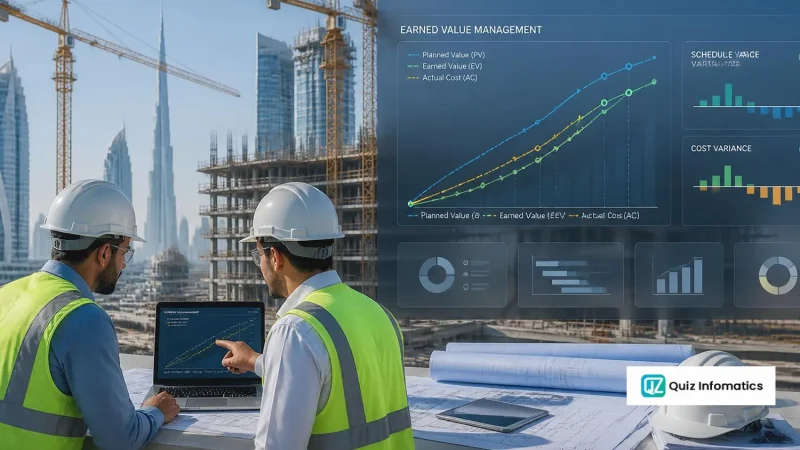
    Budget, committed and actual, live. That single change is what makes an overrun visible in week three instead of month three.

  3. Approval commits the budget

    An LPO or subcontract consumes budget the moment it is approved, not when the invoice eventually arrives.

    Procurement →
  4. Material lands and costs the job that day

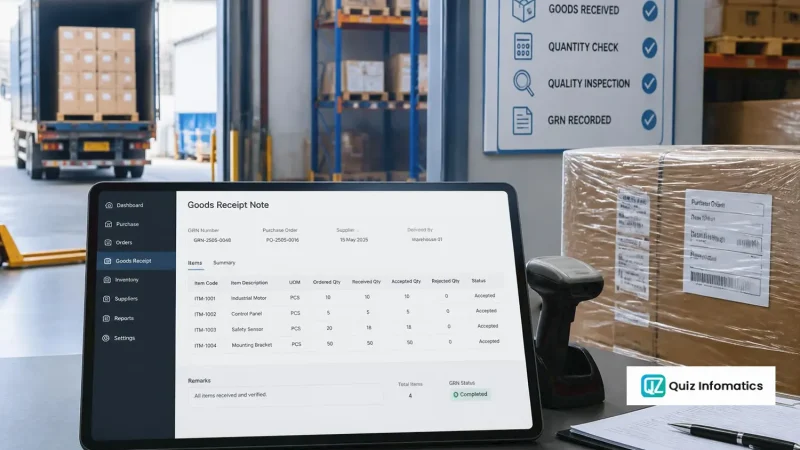
    GRN three-way matched against the order and the invoice, issued from site stores against the cost code that consumed it.

    Site inventory →
  5. Site labour posts to the WBS

    Timesheets and attendance allocate labour to the cost code, and the same run produces a WPS-compliant SIF file.

    WPS payroll →
  6. Subcontractor work is certified

    Progress claims assessed against the contract, back-charges netted off, retention deducted, payment certificate issued.

  7. The IPC goes out in days, not weeks

    Measured work valued from the same BOQ, variations included, retention applied automatically. This is where the cash cycle is won.

  8. Revenue recognises itself

    Percentage of completion posts inside the ledger, so WIP, retention and the P&L reconcile without a spreadsheet bridge.

    Accounting →

Platform choice

Which ERP platform fits a UAE contractor

We implement all four in house. That is the only reason we can tell you where each one stops being the right answer.

Most contractors start here

Odoo

Broad functionality at a controlled licence cost. For a contractor under 100 users this is usually the honest answer, and it is the one a licence-tied vendor will not give you.

  • ✓ Lowest total cost of the four, by a wide margin
  • ✓ Modular, so you start with costing and procurement
  • × Weaker on multi-entity consolidation
Odoo for construction →
If you live in Microsoft

Dynamics 365 Finance & Operations

If your team is already in Microsoft 365, the adoption curve is shorter than anything else on this list, and project accounting for contractors is genuinely strong.

  • ✓ Native Excel, Teams and Power BI integration
  • ✓ Familiar interface cuts training time materially
  • × Licensing is complex; we scope it before you commit
Dynamics 365 for construction →
Groups with several entities

Oracle NetSuite

When four companies produce four closes and a group number nobody fully trusts, this is what fixes it. Intercompany elimination handled once, not every month.

  • ✓ Best-in-class multi-entity consolidation
  • ✓ Mature audit trail for regulated groups
  • × Overkill, and overpriced, for a single entity
Oracle NetSuite →

Whichever core you choose, we add CogniVision for site attendance and gate access, and Zuper FSM where snagging and maintenance crews work off the same job data. Compare all four →

For contracting businesses in the GCC, project cost visibility is not a nice to have. It is the difference between a healthy margin and a loss. Our ERP configurations are designed to surface that visibility in real time, not at month end.

How an implementation runs

Five stages. You know the cost and the date before stage one ends.

A single-entity contractor is typically live in 8 to 12 weeks.

  1. 01

    Discovery

    We sit with finance, QS, procurement and the site team. No template questionnaire.

    Week 1–2
  2. 02

    Fixed proposal

    Scope, platform, modules, integrations, timeline and a fixed price. In scope means covered.

    Week 2
  3. 03

    Build & migrate

    Configuration, BOQ and cost-code migration, integrations, reviewed by your team every sprint.

    Week 3–9
  4. 04

    Train & go live

    Role-based training on your own projects, a parallel certification run, then cutover on site.

    Week 9–12
  5. 05

    Hypercare

    We stay until the first IPC cycle runs clean in the new system.

    Post go-live

How we implement → Estimate the cost → Read the buyer's guide →

Estimating and tendering

From tender to BOQ to live cost control

The gap

Three structures, one job

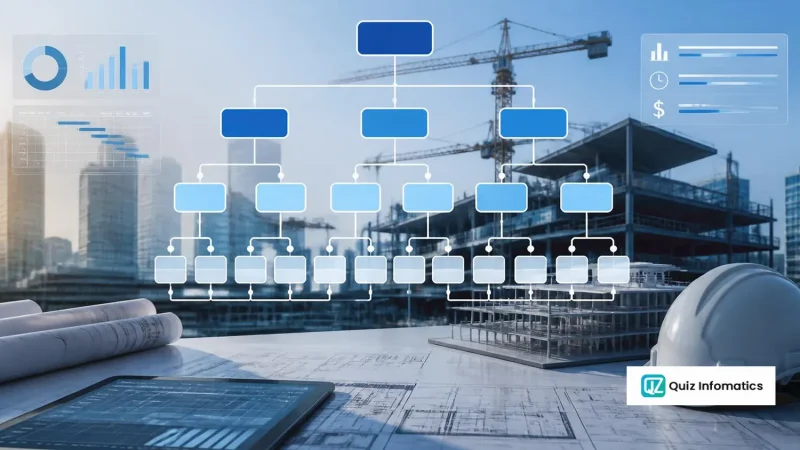
The gap most contractors carry is between the estimate that won the job and the system that runs it. The estimator prices by trade in a spreadsheet. Procurement orders by supplier package. Finance reports by account.

  • › Three structures describing the same work
  • › Reconciled by hand, or not at all
  • › Construction ERP closes it by importing the BOQ as the cost structure
  • › Every order, subcontract, timesheet and plant charge coded to a BOQ line
Procurement →
Where over-runs surface

In a line, not in the P&L

Cost-to-date against the priced rate at line level. That is where over-runs actually appear — not in the monthly accounts, but in a single BOQ line where the priced rate assumed one thing and the ordered material cost another.

  • › Visible in week three rather than month four
  • › Rate libraries and historical cost data
  • › BOQ import from Excel and standard tender formats
  • › Markup and preliminaries allocation
  • › And the winning tender converted into the project budget without re-keying
Project costing →

Construction finance

The three numbers general ERP gets wrong

Retention

Withheld at the contract percentage on client applications and again on subcontractor certificates, held in separate ledger accounts rather than netted into receivables and payables. Release tracked against practical completion and defects liability dates, with ageing. For most UAE contractors, aged retention is one of the largest recoverable balances on the balance sheet and the least actively managed.

Variations

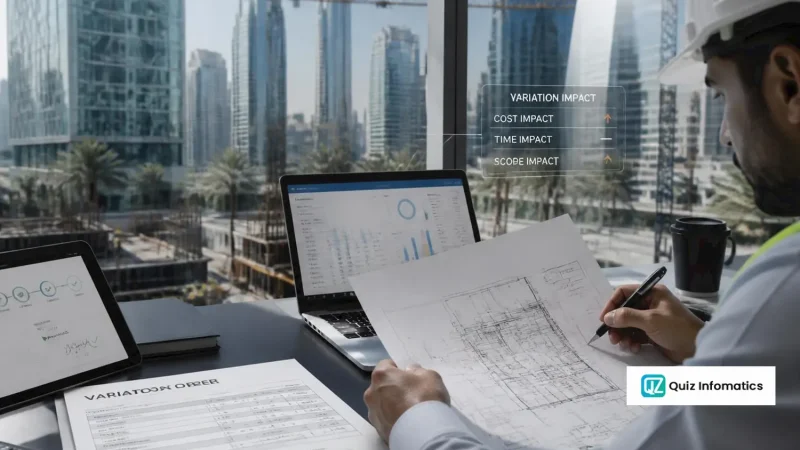
Recorded against the contract with their own value, status and approval position, so approved, submitted and anticipated variations report separately. Unapproved variations stay out of recognised revenue while remaining visible in the cost forecast — the distinction auditors look for, and the one contractors most often get wrong in both directions. Variations built and never billed are the single largest source of margin loss in UAE contracting.

Work in progress

Calculated from cost incurred against total forecast cost, with percentage-of-completion revenue recognition and over- and under-billing per project. This is the reporting most contractors struggle to produce monthly, and the reason auditors ask for a project cost breakdown.

Each is covered in full on construction accounting software →

The claims, explained

Primavera P6, IPC and BOQ-to-payment

The four claims in the header, set out properly rather than stated in four words each.

Primavera P6 integration

Most UAE main contractors and consultants mandate P6 for programme. Integration links programme activities to cost codes, so schedule slippage translates into a cost impact — extended preliminaries, plant standing time, labour retained on site — rather than staying a planning conversation the commercial team hears about late.

IPC generated in days

Interim payment certificates built from measured progress against BOQ items, with previously certified amounts, retention, advance recovery and VAT applied automatically. Contractors typically spend a week each month assembling an application in Excel.

BOQ to payment

One continuous chain: BOQ line, budget, purchase order or subcontract, delivery, cost, measured progress, application, certificate, payment. Each step references the same cost code, which is what makes the audit trail defensible when a claim is argued eighteen months later.

Secure audit trail

Every transaction, approval and revision timestamped and attributable, retained for the periods UAE tax and contract law require. Document control covers the drawing and transmittal side.

UAE compliance

UAE and GCC compliance

015% VAT and WPS site payroll

VAT on progress applications, retention and subcontractor certificates, with the timing rules construction contracts create. WPS payroll for site labour, with hours allocated to project cost codes rather than a single overhead account.

02Corporate tax and e-invoicing

Corporate tax requires project-level profitability to be supportable and related-party subcontracting documented. E-invoicing readiness matters as the FTA mandate phases in through 2027 — interim applications and certificates will need to move to structured invoices.

03Where imported systems run out

Systems built for other markets typically handle VAT and stop. The advance payment and retention structures used in standard UAE construction contracts, and the WPS obligation for site labour, are where they run out.

Explore in depth

The systems behind construction ERP

Construction accounting software

Progress billing, retention, subcontractor certificates, WIP and percentage-of-completion revenue in detail. Construction accounting.

Construction project management software

Programme, site progress, RFIs, submittals, snagging and handover. Project management.

Document control

Drawing registers, transmittals, revision control and the audit trail a delay claim rests on. Document control.

Contracting FAQs

What contractors ask us first

What is construction ERP software?

Construction ERP software is a business management system built around projects rather than products. It links the BOQ, budget, procurement, subcontracts, labour, plant and progress billing to a single project ledger, so a contractor can see committed cost, actual cost and forecast final cost on every job in real time.

How is construction ERP different from standard ERP?

A standard ERP is organised around products, customers and accounting periods. Construction ERP is organised around the project and the cost code, and adds the workflows a contractor actually runs: BOQ import, variation orders, subcontractor payment certificates, retention, WIP calculation and progress invoicing. A general ERP can be forced into this shape, usually at heavy customisation cost.

Does construction ERP handle BOQ and cost coding?

Yes. The bill of quantities is imported as the project’s cost structure, and every purchase order, timesheet, subcontract and plant hire is coded to a BOQ line. That gives cost-to-date against budget at line level, which is where over-runs surface long before they appear in the monthly P&L.

How does construction ERP manage subcontractors?

Subcontracts are set up with their own value, scope, payment terms and retention percentage. Work-done certificates are raised against the subcontract, retention is withheld automatically, and back-charges and advance recovery are deducted before payment. Committed subcontract value stays visible against the amount certified and actually paid.

How does the system handle retention and advance payments?

Retention is withheld at the agreed percentage on both client applications and subcontractor certificates, with release tracked against practical completion and defects-liability dates. Advance payments are recorded as recoverable and recovered at the agreed rate on each application, so the outstanding balance is always visible rather than held in a side spreadsheet.

Can it produce WIP and revenue recognition figures?

Yes. The system calculates work in progress from cost incurred against total forecast cost, applies percentage-of-completion revenue recognition, and shows over- and under-billing per project. This is the reporting most UAE contractors struggle to produce monthly, and the reason auditors ask for a project cost breakdown.

How does construction procurement work in the system?

Site material requests convert into requisitions, RFQs and purchase orders coded to the project and cost line, with approvals routed by value. Committed cost updates the project budget the moment the order is issued rather than when the invoice arrives — the difference between catching an over-run and reporting one.

Which UAE compliance requirements does it cover?

A construction ERP for the UAE should handle 5% VAT on progress applications and retention, WPS-compliant payroll for site labour, corporate tax reporting, and readiness for the FTA e-invoicing mandate. Document control for drawings, submittals and RFIs is normally part of the same system.

How much does construction ERP software cost in the UAE?

Cost is driven by user numbers, whether site staff need access, and how many project modules you switch on. A small contractor running finance, procurement and project costing sits at a very different figure from a main contractor with plant, HR and document control. Scoping against your live project list gives a real number.

How long does implementation take for a contracting company?

Three to six months for most UAE contractors. The critical path is agreeing one cost-code structure across estimating, procurement and finance, then loading opening balances for projects already in progress. Companies that go live at the start of a new project rather than mid-contract have a noticeably smoother transition.

Talk to a consultant

Talk to an ERP consultant, not a salesperson

Book a free 30 minute call with QZ Infomatics in Dubai. You will leave it with a platform recommendation, the reasoning behind it, a realistic timeline and an indicative budget band — before you commit to anything.

  • ✓ A consultant who delivers projects, not a sales desk
  • ✓ Odoo, Microsoft Dynamics 365 and Oracle NetSuite compared honestly
  • ✓ Licence cost and implementation cost quoted as separate numbers
  • ✓ If we are not the right fit for you, we will say so

Book a free call

We reply within one working day.

Or WhatsApp us on +971 4 243 4010

Request a demo